The Mayan Calendar Explained: Cycles, Meaning, and Myths
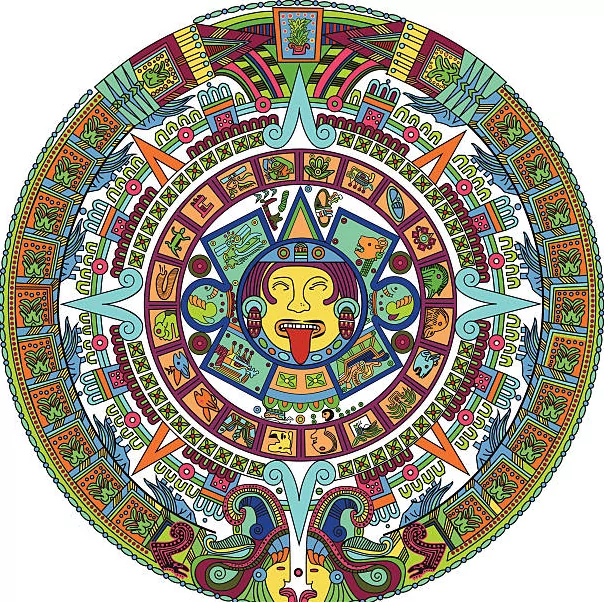
The Mayan Calendar stands as one of the world’s most precise and complex ancient timekeeping systems, widely used by the Maya civilization in Mesoamerica. It blends astronomical cycles, divination, and cultural rituals into an intricate web that continues to inspire scholars and mythology today. This guide provides an overview of how the Mayan Calendar works, its main cycles, the spiritual meanings associated with its dates, and the myths that have arisen around it—most notably the “2012 phenomenon.”
Core Components of the Mayan Calendar
Tzolk’in: The Sacred 260-Day Cycle
The Tzolk’in, or Sacred Round, is a 260-day calendar composed of 20 day names combined with numbers 1–13, producing 260 unique days. It operates as a divinatory cycle, assigning significance to every day for rituals and astrology. This cycle is believed to mirror agricultural and human gestational rhythms. (e.g., 1 Imix, 2 Ik, 3 Akbal … until 13 Ben, then restarting at 1 Ix, 2 Men, etc.)
Haab’: The 365-Day Solar Year
The Haab’ is the Maya solar calendar, consisting of 18 months of 20 days each (360 days) plus an extra “month” of 5 days called Wayeb’, totaling 365. Unlike the Gregorian leap year, the Haab’ does not use intercalary adjustments, making it a “vague year.” The Wayeb’ period was considered unlucky and observed with rituals to ward off misfortune. (e.g., day 1 Pop, day 2 Pop …)
Calendar Round: The 52-Year Synchronization
The Tzolk’in and Haab’ run simultaneously; a particular combination of Tzolk’in and Haab’ only recurs every 52 years—known as the Calendar Round. This full synchronization was a time of renewal and celebration, observed with elaborate ceremonies as seen also among the Aztecs. A single Calendar Round equals 18,980 unique days (260 × 365 / 5).
Long Count: Tracking Deep Time
For recording historical events and cosmic cycles, the Maya used the Long Count calendar. It counts days from a mythic creation date (correlated to August 11, 3114 BCE) and is composed of nested cycles:
- Kin = 1 day
- Uinal = 20 Kin = 20 days
- Tun = 18 Uinal = 360 days
- Katun = 20 Tun = 7,200 days
- Baktun = 20 Katun = 144,000 days
A Long Count date specifies positions for each cycle, e.g., 13.0.0.0.0. This system allows Maya to refer to dates thousands of years into past or future, underlining their cosmological perspective.
The Meaning and Function of Maya Calendar Cycles
- Astronomical Alignment: The calendar tracks solar, lunar, and planetary motions, with Tzolk’in used for ritual timing and Haab’ for agricultural events.
- Spiritual Significance: Each day carries symbolic meaning, influencing ceremonies, fortune-telling, and personal destiny. Maya priests consulted Tzolk’in days to select auspicious times.
- Historical Recording: Long Count inscriptions on monuments mark significant political, astronomical, and mythological events.
Myths and Modern Interpretations
The 2012 Phenomenon
The Mayan Calendar captured global imagination when its Long Count completed a “Great Cycle” (13 Baktuns) on December 21, 2012. Media outlets fueled rumors of doomsday predictions—however, Maya sources and archaeologists agree the cycle’s end signified transition or renewal, not apocalypse. This misunderstanding reflects broader fascination with ancient knowledge and its consequences for modern myth-making.
Continued Use and Cultural Heritage
While the classic Maya civilization declined, the calendar remains in use among modern Maya communities in Guatemala and southern Mexico, serving both ritual and agricultural functions. The cyclical perspective on time shapes Maya identity, worldview, and cultural continuity.
Comparing Mayan and Western Calendars
| System | Length of Year | Cycles Included | Leap Year Adjustment |
|---|---|---|---|
| Mayan (Haab’) | 365 days | 18 months + 1 (Wayeb’) | None |
| Gregorian | 365 days | 12 months | Leap year every 4 years |
Key Insights for Understanding the Mayan Calendar
- Multiple, overlapping cycles measure time for ritual, civil, and cosmic events.
- Precision in mathematics and astronomy enabled Maya to predict eclipses, planetary movements, and seasonal changes.
- Cultural myths—like the 2012 prophecy—stem from misunderstanding sophisticated cyclical concepts of time.
The Mayan Calendar’s legacy rests on its mathematical ingenuity, astronomical accuracy, and enduring cultural impact. Its complex cycles intertwined daily life with cosmic rhythms, fostering a worldview where time is sacred, cyclic, and infinite. By exploring the calendar’s mechanisms and dispelling popular myths, we gain deeper appreciation for ancient wisdom and its relevance to both scientific and spiritual inquiry

