Meeting Calendars: Reduce Overbooking with Smart Buffers
In today’s fast-paced workplace, calendars are often packed from morning to evening with meetings, calls, presentations, and deadlines. While scheduling software has made it easier than ever to coordinate appointments, it has also created a new challenge: overbooking. Many professionals find themselves jumping from one meeting to another without time to prepare, reflect, or even take a short break.
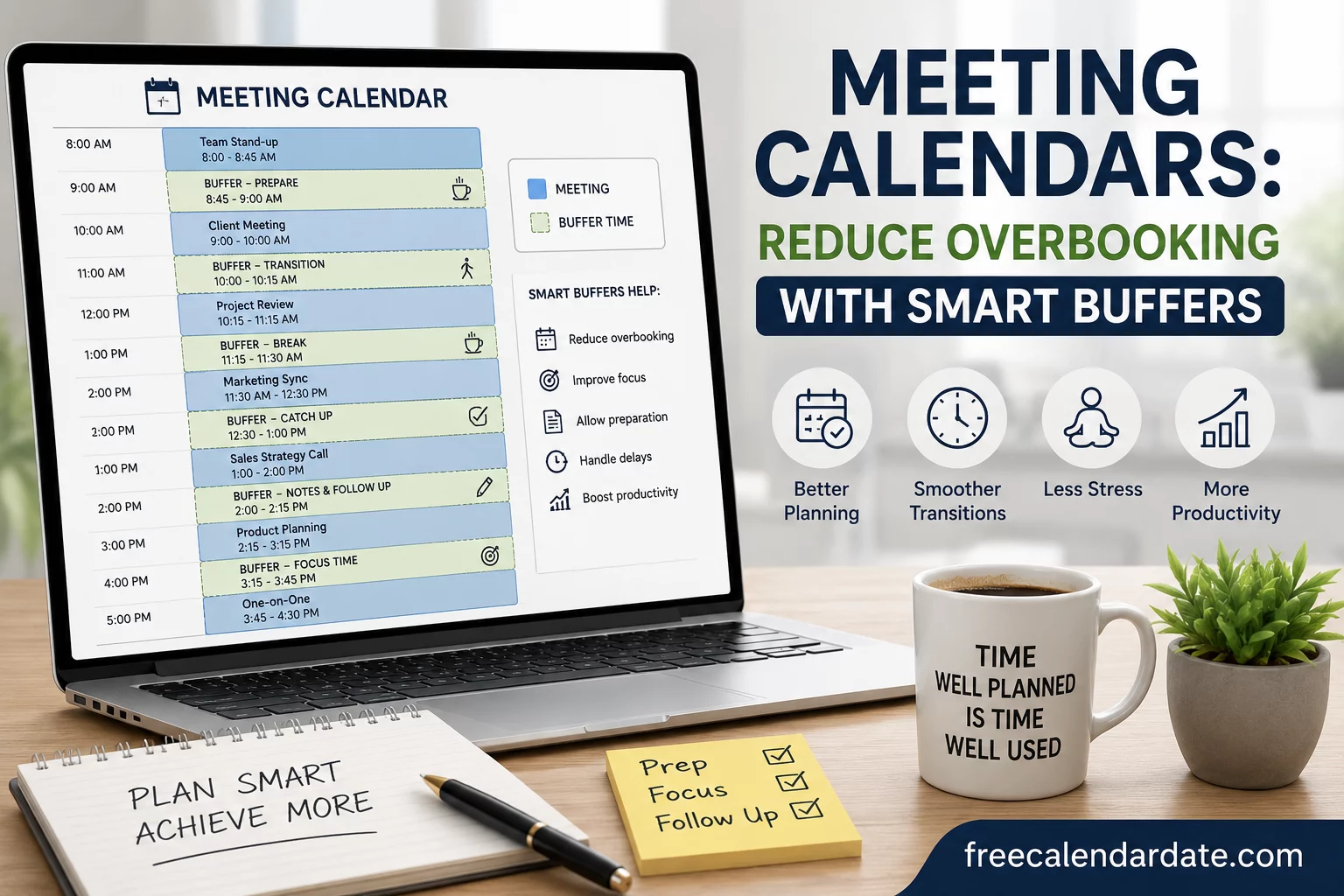
This is where smart buffers come in. By intentionally adding small gaps between meetings, organizations and individuals can create more realistic schedules, improve productivity, and reduce stress. A well-designed meeting calendar isn’t just about fitting more appointments into the day—it’s about creating enough space to make every meeting more effective.
In this guide, we’ll explore how smart buffers work, why they matter, and how you can use them to transform your meeting calendar into a tool that supports focus, efficiency, and better decision-making.
What Is a Meeting Calendar?
A meeting calendar is a scheduling system used to organize appointments, team discussions, client calls, project reviews, and other business activities. Most modern calendars integrate with email, video conferencing platforms, and collaboration tools, making it easy to schedule and manage meetings.
However, without proper planning, calendars can quickly become overcrowded. Consecutive meetings leave little room for preparation or follow-up, resulting in decreased productivity and increased fatigue.
A smart meeting calendar focuses not only on scheduling events but also on managing the time between them.
Understanding Smart Buffers
A smart buffer is a planned gap inserted before or after a meeting. These buffers are designed to create breathing room in your schedule and prevent back-to-back commitments.
Common buffer durations include:
- 5-minute buffers for short meetings
- 10-minute buffers for standard meetings
- 15-minute buffers for important discussions
- 30-minute buffers for strategic or high-level meetings
Rather than viewing these gaps as unused time, think of them as essential productivity tools.
Why Overbooking Happens
Many professionals unintentionally overbook themselves because digital calendars make scheduling extremely convenient. A one-hour slot looks available, so another meeting gets added.
Over time, this creates several problems:
Lack of Preparation Time
Without a buffer, participants often enter meetings unprepared because they are rushing from another discussion.
Delayed Start Times
When one meeting runs late, every meeting after it is affected.
Increased Mental Fatigue
Constant context switching between topics can quickly drain focus and energy.
Reduced Productivity
Back-to-back meetings leave little time to complete actual work.
Smart buffers help solve these issues by creating natural transitions throughout the day.
Benefits of Smart Buffers in Meeting Calendars
Improved Focus
Buffers give your brain time to switch between tasks and topics. Instead of carrying thoughts from one meeting into the next, you can reset and refocus.
Better Meeting Quality
Participants who have time to review notes and prepare questions tend to contribute more effectively.
Reduced Stress
Knowing you have a few minutes between appointments reduces the pressure of constantly rushing.
Enhanced Productivity
Buffer time can be used to document action items, respond to urgent messages, or complete small tasks.
More Accurate Scheduling
Meetings often take longer than expected. Built-in buffers help absorb delays without disrupting the rest of your schedule.
How Smart Buffers Improve Team Performance
Smart buffers aren’t only beneficial for individuals. Entire teams can benefit from adopting better scheduling practices.
Better Collaboration
Team members arrive prepared and engaged instead of distracted by previous commitments.
Fewer Scheduling Conflicts
Buffer periods reduce overlap and make calendars easier to manage.
Improved Decision-Making
People make better decisions when they have time to think rather than moving immediately from one discussion to another.
Increased Employee Well-Being
A less crowded calendar supports healthier work habits and reduces burnout.
Organizations that prioritize thoughtful scheduling often experience higher levels of productivity and employee satisfaction.
Best Practices for Creating Smart Buffers
Schedule Shorter Meetings
Instead of defaulting to 60-minute meetings, consider scheduling:
- 25-minute meetings instead of 30 minutes
- 50-minute meetings instead of 60 minutes
This automatically creates buffer time without reducing the number of meetings.
Protect Your Buffer Time
Treat buffers as important appointments rather than optional free time. Avoid allowing others to schedule over them.
Use Different Buffer Sizes
Not every meeting requires the same amount of transition time. Customize buffers based on the complexity and importance of the meeting.
Block Focus Time
Combine smart buffers with dedicated focus blocks for deep work and project completion.
Review Your Calendar Weekly
Regular reviews help identify patterns of overbooking and areas for improvement.
Smart Buffer Strategies for Different Roles
Managers
Managers often spend much of their day in meetings. Buffers provide time to:
- Review team updates
- Prepare feedback
- Document decisions
Sales Professionals
Sales teams can use buffer periods to:
- Update CRM systems
- Send follow-up emails
- Prepare for upcoming client calls
Executives
Executives benefit from larger buffers that allow for strategic thinking and decision-making.
Remote Workers
For remote employees, buffers reduce screen fatigue and provide opportunities to step away from the computer.
Common Meeting Calendar Mistakes
Even with modern scheduling tools, many professionals continue to make avoidable mistakes.
Booking Every Available Slot
Just because time is available doesn’t mean it should be filled.
Ignoring Time Zones
Global teams need buffers to account for scheduling complexity across regions.
Overestimating Productivity
Back-to-back meetings often look efficient on paper but reduce overall effectiveness.
Failing to Leave Follow-Up Time
Action items generated during meetings require dedicated time for completion.
Recognizing these mistakes is the first step toward creating a healthier schedule.
Using Technology to Support Smart Buffers
Many calendar platforms now offer features designed to reduce overbooking.
These include:
- Automatic buffer settings
- Scheduling limits
- Focus time protection
- Meeting duration recommendations
- Availability controls
Using these features can help maintain buffer time without constant manual adjustments.
Building a Sustainable Meeting Culture
Smart buffers are most effective when they become part of your workplace culture.
Encourage teams to:
- Respect buffer periods
- Start and end meetings on time
- Schedule only necessary meetings
- Share agendas in advance
- Use asynchronous communication when possible
A culture that values thoughtful scheduling creates better outcomes for everyone involved.
The Future of Meeting Calendars
As workplaces continue to evolve, calendar management is becoming increasingly important. Hybrid work environments, global teams, and growing digital workloads make effective scheduling a competitive advantage.
Future calendar tools will likely become even smarter, using artificial intelligence to suggest optimal meeting times, automatically create buffers, and help users maintain healthier schedules.
Organizations that embrace these practices today will be better positioned to improve productivity and employee well-being in the years ahead.
Conclusion
Meeting calendars should do more than simply organize appointments. They should support productivity, focus, and effective collaboration. By incorporating smart buffers into your schedule, you can reduce overbooking, improve meeting quality, and create a more balanced workday.
Whether you’re managing a busy executive calendar, coordinating a remote team, or handling client meetings, small gaps between appointments can make a significant difference. Smart buffers create the space needed for preparation, reflection, and meaningful work.
In a world where calendars often feel overloaded, the most productive schedule may not be the busiest one—it may be the one that leaves enough room to think, focus, and perform at your best.

