Habit Tracking on a Monthly Calendar (Simple System)
Building good habits is one of the most effective ways to improve your life, but staying consistent can be difficult. Whether you’re trying to exercise regularly, drink more water, read daily, or improve your productivity, success often comes down to one thing: tracking your progress.
While there are countless habit-tracking apps available today, one of the simplest and most effective methods remains the monthly calendar. A basic calendar provides a clear visual representation of your progress and helps you stay accountable without the distractions of digital tools.
In this guide, you’ll learn how to use habit tracking on a monthly calendar with a simple system that is easy to maintain and highly effective for long-term success.
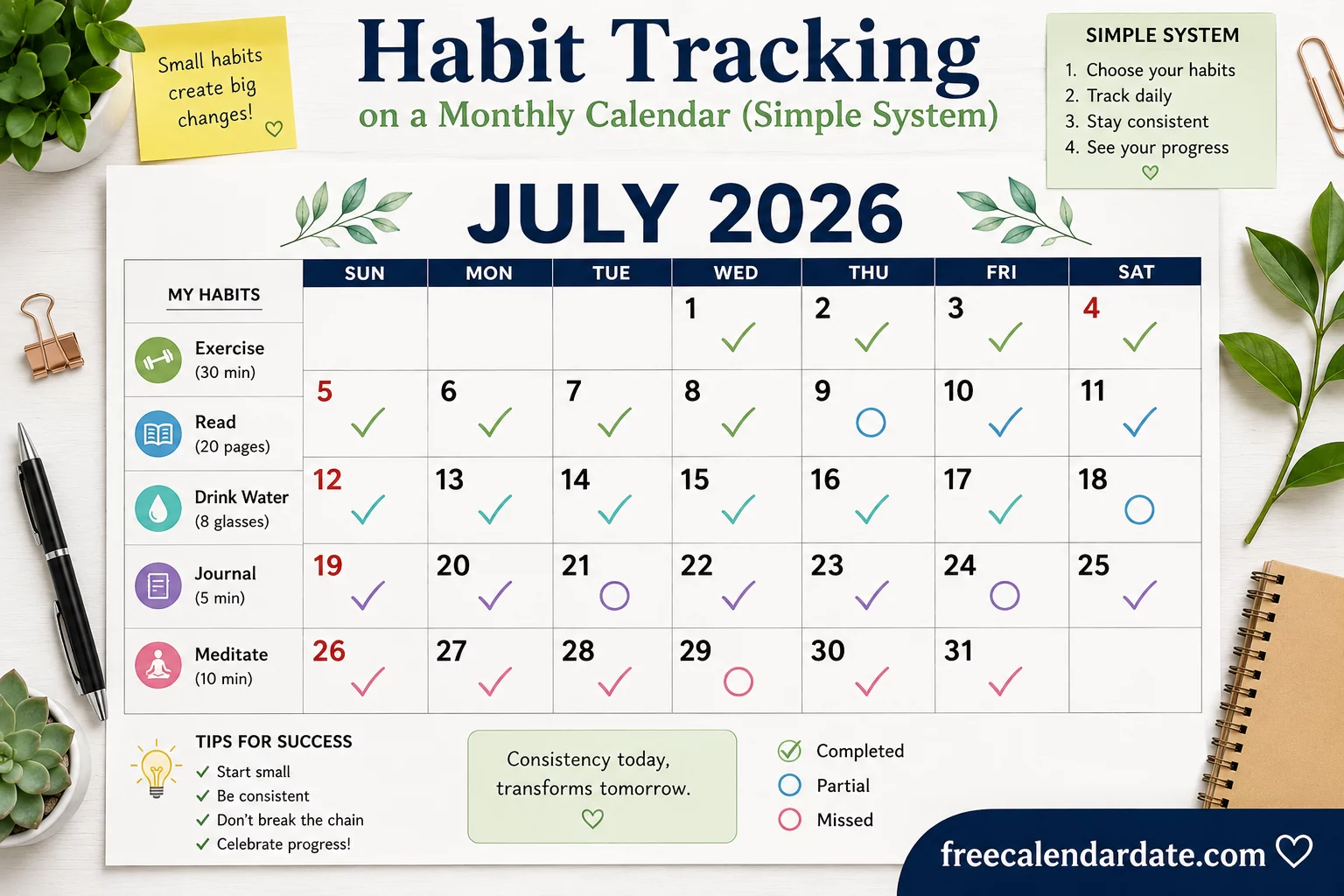
Why Habit Tracking Works
Most people focus heavily on goals but spend very little time tracking the actions required to achieve them. Habits are the small daily behaviors that eventually produce significant results.
For example:
- Reading 10 pages per day can lead to dozens of books each year.
- Walking 30 minutes daily can improve overall health.
- Saving a small amount consistently can build financial security.
Tracking these behaviors creates awareness and accountability, making it much easier to stay committed.
The Power of a Monthly Calendar
A monthly calendar offers several advantages over complicated tracking systems.
Visual Motivation
When you see a series of completed days on your calendar, it creates momentum. Most people naturally want to continue their streak.
Simplicity
There are no complicated dashboards, reports, or settings. You simply mark each day you complete a habit.
Accessibility
A printed calendar can be placed on your desk, refrigerator, or wall where you’ll see it regularly.
Long-Term Perspective
A monthly view helps you recognize patterns and trends that may not be obvious in daily tracking.
Choosing the Right Habits to Track
One of the biggest mistakes beginners make is trying to track too many habits at once.
Instead, start with two to five important habits.
Examples include:
Health Habits
- Exercise
- Drinking water
- Taking vitamins
- Getting enough sleep
Productivity Habits
- Deep work sessions
- Daily planning
- Completing important tasks
- Reading professional material
Personal Growth Habits
- Journaling
- Meditation
- Learning a language
- Reading books
Choose habits that align with your goals and can realistically be performed on a regular basis.
Creating Your Monthly Habit Tracker
The setup process is surprisingly simple.
Step 1: Print a Monthly Calendar
Choose a calendar with enough space to mark each day.
Many people prefer:
- Monthly printable calendars
- Blank calendar templates
- Large-print calendars
The format doesn’t matter as much as consistency.
Step 2: List Your Habits
Write your habits along the side or bottom of the calendar.
For example:
- Exercise
- Read
- Drink Water
- Journal
Keep the list short and manageable.
Step 3: Create a Tracking Method
Use a simple marking system such as:
- Checkmarks
- Colored dots
- X marks
- Highlighted squares
The goal is to instantly see whether you completed the habit.
Step 4: Track Daily
Each day, mark completed habits immediately.
Avoid waiting until the end of the week, as this can lead to inaccurate tracking.
The “Don’t Break the Chain” Method
One of the most popular habit-tracking strategies is known as the “Don’t Break the Chain” method.
The process is simple:
- Complete your habit.
- Mark the day on your calendar.
- Build a streak.
- Focus on maintaining the streak.
As the chain grows longer, you’ll become increasingly motivated to keep it going.
This visual reinforcement is surprisingly powerful.
Why Monthly Tracking Is More Effective Than Daily To-Do Lists
Many people confuse tasks with habits.
A task is something you complete once.
Examples:
- Finish a report
- Schedule an appointment
- Buy groceries
A habit is a repeated behavior.
Examples:
- Exercise daily
- Read every evening
- Practice a skill
Monthly calendars are ideal for habits because they emphasize consistency rather than individual accomplishments.
Color Coding Your Habits
Color coding can make your calendar easier to understand.
For example:
- Green for health habits
- Blue for productivity habits
- Yellow for learning habits
- Red for important routines
At the end of the month, you’ll be able to quickly identify strengths and weaknesses.
A colorful habit tracker also tends to be more visually engaging.
Tracking Multiple Habits Without Feeling Overwhelmed
The key to successful habit tracking is keeping things simple.
If you’re tracking five habits, you don’t need elaborate charts or statistics.
A basic system might look like this:
| Habit | Tracking Method |
|---|---|
| Exercise | Green Check |
| Read | Blue Check |
| Water Intake | Yellow Dot |
| Journal | Purple Check |
| Meditation | Red Dot |
Simple systems are easier to maintain consistently.
Reviewing Your Progress
At the end of each week, spend a few minutes reviewing your calendar.
Ask yourself:
- Which habits were easiest?
- Which habits were difficult?
- What caused missed days?
- What improvements can be made?
Weekly reviews help you identify obstacles before they become long-term problems.
Common Habit Tracking Mistakes
Many people abandon habit tracking because they make the process too complicated.
Avoid these common mistakes:
Tracking Too Many Habits
Focus on a small number of important habits.
Seeking Perfection
Missing a day isn’t failure.
The goal is consistency, not perfection.
Ignoring Missed Days
Instead of feeling guilty, learn from missed habits and continue.
Overcomplicating the System
The best tracker is the one you’ll actually use every day.
How Habit Tracking Builds Motivation
Motivation is often misunderstood.
Many people believe motivation comes first, followed by action.
In reality, action often creates motivation.
When you see progress on your calendar:
- Confidence increases
- Momentum builds
- Habits become easier
- Success becomes more visible
This creates a positive feedback loop that supports long-term growth.
Digital vs Printable Habit Tracking
Both methods can work effectively.
Printable Calendars
Advantages:
- Visible all day
- No notifications
- Easy to customize
- Tangible progress
Digital Habit Trackers
Advantages:
- Automated reminders
- Progress statistics
- Mobile accessibility
- Cloud synchronization
Many people find that printable monthly calendars offer greater simplicity and accountability.
Best Habits to Start Tracking Today
If you’re unsure where to begin, consider these high-impact habits:
Daily Walking
Improves physical and mental health.
Reading
Supports learning and personal development.
Drinking Water
Promotes energy and overall wellness.
Planning Your Day
Increases productivity and reduces stress.
Gratitude Journaling
Encourages a positive mindset.
Start with one or two habits before expanding your system.
Why Consistency Beats Intensity
Many people try to make dramatic changes overnight.
A better approach is focusing on small actions performed consistently.
For example:
- Reading 10 pages daily beats reading 100 pages once a month.
- Walking 20 minutes daily beats exercising intensely once a week.
Your monthly calendar helps reinforce this principle by emphasizing daily action.
Conclusion
Habit tracking on a monthly calendar is one of the simplest and most effective systems for personal growth. It requires minimal effort, provides immediate visual feedback, and helps you stay accountable to your goals.
By choosing a few important habits, tracking them consistently, and reviewing your progress regularly, you can create meaningful improvements in your health, productivity, finances, and overall quality of life.
The beauty of this system lies in its simplicity. You don’t need expensive software or complicated spreadsheets. A basic monthly calendar, a pen, and a commitment to consistency are all you need to start building better habits and achieving lasting results.

